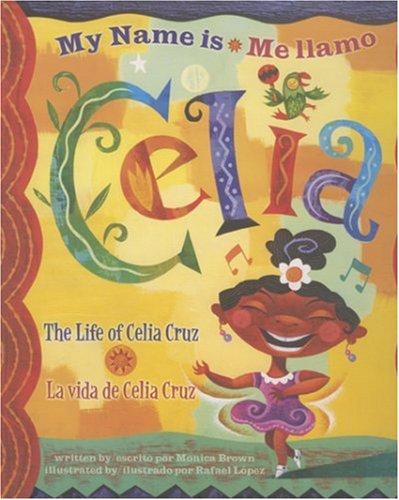
 This bilingual book allows young readers to enter Celia Cruz's life as she becomes a well-known singer in her homeland of Cuba, then moves to New York City and Miami where she and others create a new type of music called salsa.
Customer Review: Queen of Salsa
Celia Cruz is brought to life for young children in this colorful book. Like the tropics from which she came, the book is full of vibrant illustrations. The story is put into simple terms for young readers or a teacher or parent to read. Since the illustrations are so vibrant and bold children will be enthralled by the unique features of the art work. Each biographical page is bilingual for reading in Spanish or English or both. The book describes her early family life in Cuba, her departure after the revolution, her musical group Sonora Mantacera, meeting her musician husband,her associations with other salsa greats like Tito Puente and Willie Colon, her relocation to Miami and the various honors and recognitions she achieved. This is a great little book for primary and middle school libraries as well as community libraries. Students whoose first language is Spanish can benefit from the bilingual book through middle school years. This is a fun book.
Customer Review: Wonderful!
My Name is Celia: The Life of Celia Cruz is written by Monica Brown and illustrated by Rafael Lopez. The book is the recipient of a Pura Belpre' Illustrator Honor Award for outstanding work that portrays, affirms and celebrates the Latino cultural experience in an outstanding work of literature for children and youth. The exciting and inspirational life of beloved Cuban-born salsa queen, Celia Cruz, is celebrated in the bilingual book My Name is Celia Me Llamo Celia: The Life of Celia Cruz. Celia was born in Havana to a large family where their lives were intertwined and music was an important part of everyday life. Celia's papa wanted her to become a teacher but music filled her soul with happiness. She was encouraged by a teacher to "go out into the world and sing...." Celia experienced prejudice and fled her beloved country Cuba when the revolution began. From Cuba, Celia traveled the world sharing her love of music with the world. Rafael Lopez' illustrations are vibrant, fluid combinations of color that beg to be studied. The scenes fill the page and stir emotions as you read the story and live it through his drawings. Armchair Interviews says: My Name is Celia: The Life of Celia Cruz is a beautiful and educational addition to any child's library. We highly recommend it.
While many baseball players look forward for their time off after the long season is over in the fall, many of them do things that couldn't do during the season. Some of these things are to enjoy their time off, being with their families, taking vacations around the world or just relax. Who wouldn't like to do these things when possible? But some continue to play ball.
That's right. Some players look forward for the off-season so they can go back to their home countries and be the major-league superstars they already are. Most of these players are from the Latin American countries where baseball is the passion of many. During the winter months of December, January and February, there's a baseball league going on in countries like Venezuela, Dominican Republic, Mexico and Puerto Rico where the weather is not less than perfect for baseball - around 80 degrees. Stars like Miguel Tejada, Ronnie Belliard, Francisco "The Kid" Rodriguez, and the newest Detroit Tiger Miguel Cabrera are few of the ones that return home to play in their native country's professional league.
What many people don't know is that in these countries, baseball is not only a past-time; it's what everyone talks about - at the job, at school, with friends and family. Especially at the end of January, when things are heating up and each country's league is playing the final games to determine who will carry the flag and represent the country in the Caribbean Series. But you wonder why would major league stars risk their careers by playing at their home countries? Remember, most of the Latin American players in the major leagues came out of their home countries' winter league system. That is why the number of Latin baseball players is growing and are wanted more by the MLB teams. Now it's the time for the already-major-league-stars to inspire the upcoming talent and help them reach the highest level in baseball.
If you want to know what baseball is like in Venezuela, Dominican Republic, Puerto Rico or Mexico, then combine the feelings of the NCAA Basketball Final Four, a soccer match between Real Madrid and Barcelona, a Yankees - Red Sox game at the end of September, and any rivalry you can think of. Now, add to that, salsa music, the sound of drums and whistles playing and people dancing and chanting everywhere, some beer, and the great talent these players have to play ball. Imagine that, and is exactly what baseball is all about in these countries.
And you wonder - why do major- league-stars want to go home and play during their off season? I think you can answer that for yourself.
If you have any comments, please visit The Fit Palace's Baseball section. More interesting articles to come.
TheFitPalace.com - for sports fanatics only
dance music 2007
No comments:
Post a Comment